

Tag Archives: communications

Geopolitical Conflict, AI, and Corporate Reputation Risk: What Leaders Should Be Thinking About Now

Since the dawn of World Wars, geopolitical conflicts have gradually expanded beyond their original points of conflict. Thanks to advances in technology, particularly with AI, such conflicts today play out across digital networks, financial systems, and corporate reputations at machine speed.

Attacks on business infrastructure are not new. What has changed is scale and targets. Artificial intelligence enables bad actors to operate faster, more broadly, and with greater sophistication.

And contrary to popular belief, they are not targeting only large enterprises. Mid-sized companies, private firms, and nonprofits can be targeted just as easily and are often more vulnerable.

As tensions escalate globally, organizations face a new layer of risk that extends far beyond traditional geopolitical exposure. Today’s conflicts are amplified by AI, cyber activity, and rapidly shifting information ecosystems. The result is a more volatile environment where reputation can be impacted quickly and often unexpectedly.

For CEOs, CFOs, and boards trying to juggle challenges such as supply chain disruptions, employee safety, and inflation, there are also underlying disruptions that may cause long-term damage. The question is no longer whether geopolitical events affect reputation, but rather how quickly they can erode trust, alter stakeholder perceptions, and, ultimately, undermine corporate value.

The Risk Landscape Is Expanding

Modern conflict introduces a convergence of risks:

  • Cybersecurity threats targeting infrastructure, data, and operations
  • AI-driven misinformation that can distort narratives and erode trust
  • Synthetic media and deepfakes capable of impersonating leadership or fabricating events
  • Algorithmic amplification that accelerates the spread of both accurate and false information

These risks do not operate in isolation. They interact, often compounding one another.

A cyber incident can become a crisis.

A false narrative can trigger market reaction.

A deepfake can create confusion before facts are verified.

In an AI-driven environment, reputation is not just impacted; it is continuously tested.

The New Reputation Risks Leaders Must Anticipate

In this environment, reputation risk is evolving in ways many organizations are not yet prepared for:

  • Synthetic Crisis Events: AI-generated content can create the appearance of events that never occurred, forcing organizations into reactive positions.
  • Narrative Hijacking: Brands may be drawn into geopolitical conversations unintentionally, particularly when operations, partnerships, or leadership statements are interpreted in a broader global context.
  • Trust Erosion Through Association: Stakeholders may reassess organizations based on perceived alignment, silence, or response timing during global events.
  • Acceleration of Crisis Timelines: The window to verify, respond, and stabilize a situation continues to shrink.

Why This Moment Is Different

Geopolitical tension has always influenced business. What has changed is visibility, velocity, and veracity.

AI enables:

  • rapid content generation
  • increased plausibility of misinformation
  • difficulty distinguishing signal from noise

At the same time, stakeholders, including employees, customers, and investors, are more attuned to how organizations respond during moments of uncertainty.

Reputation is no longer shaped solely by actions. It is shaped by interpretation within a dynamic, AI-influenced narrative environment.

What Leaders Should Be Doing Now

This is not about reacting to a single event. It is about strengthening organizational readiness.

Leaders should be asking:

  • Are we managing reputation, or are we strategically designing it?
  • Are cyber risk, synthetic crises, and AI-driven narratives fully integrated into your Reputation Risk Assessment?
  • Do we have the capability to detect misinformation or synthetic media early?
  • Is leadership aligned on when to speak, what to say, and when to remain silent?
  • Do we understand how global events could reframe perceptions of our brand?

Organizations that have already embedded monitoring, scenario planning, and cross-functional alignment will respond more effectively.

Those who have not may find themselves reacting under pressure, leaving them already behind and vulnerable to missteps.

A Strategic Shift for Leadership

In today’s environment, protecting reputation requires more than traditional crisis and issues management.

It requires intentional design.

Reputation must be treated as a system, one that integrates:

  • leadership decision-making
  • communication and listening
  • stakeholder relationships
  • organizational culture
  • change management
  • ethical and responsible AI use

This is the shift toward reputation architecting, the intentional design, strengthening, and protection of trust under conditions of continuous disruption.

The Bottom Line

Geopolitical conflict now extends into the digital and reputational domains in ways that are faster, more complex, and less predictable than ever before.

Organizations will not always be able to control events. But they can control how prepared they are.

Leaders who recognize the convergence of AI, cyber risk, and reputation, and act accordingly, will be better positioned to protect trust, maintain stability, and safeguard corporate value in an increasingly uncertain world.
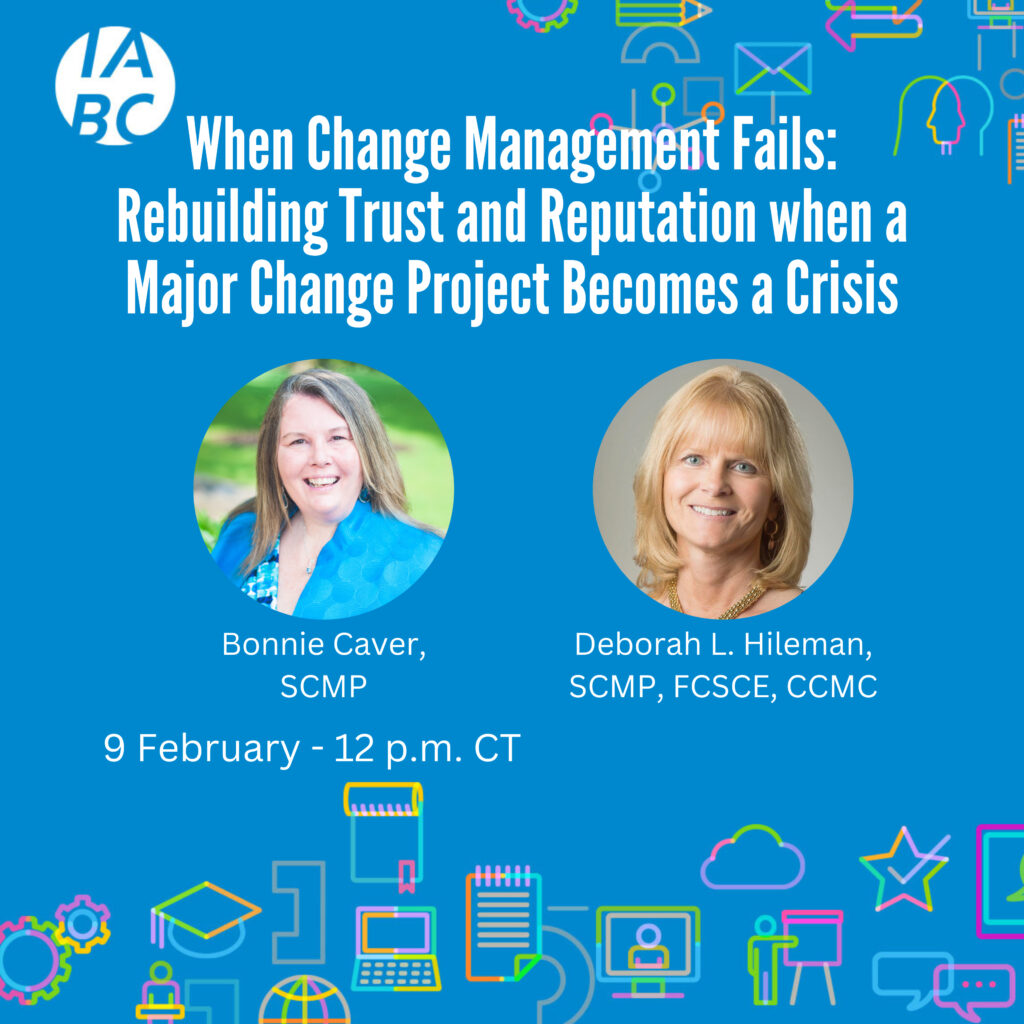
IABC Master Class: When Change Management Fails: Rebuilding Trust and Reputation when a Major Change Project Becomes a Crisis

Don’t miss this IABC Master Class — February 9, 2026.

When change initiatives fail, it is often due to a poor communication strategy and tactics. In this new IABC Master Class, understand why major change initiatives may fail and how employee trust is eroded during poorly managed transitions. Explore how open, honest, and consistent organizational messaging rebuilds credibility and stabilizes teams. Use proven methodologies and structured communication plans to lead recovery and minimize future risk. Discuss techniques to rebuild trust through consistent leadership behavior, clear corrective actions, and frequent employee engagement. Learn practical steps for repairing organizational image and stakeholder confidence, including supportive internal and external communication and visible improvements in management processes.

Presenters: Bonnie Caver, SCMP, IABC Fellow, FCSCE, Founder and CEO, Reputation Lighthouse, and Deborah L. Hileman, SCMP, FCSCE, CCMC, President and CEO, Institute for Crisis Management.

Details & Register

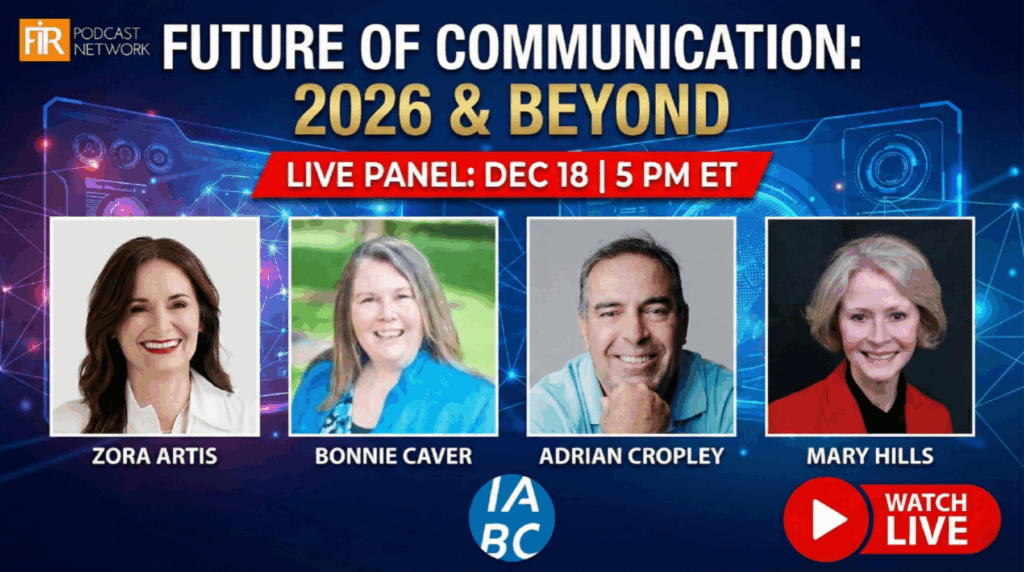
FIR Podcast Network: Circle of Fellows to Explore the Future of Communication in 2026 and Beyond

The communication profession stands at a pivotal moment. Artificial intelligence is transforming how we create and distribute content. Trust in institutions continues to erode while employees demand authenticity and transparency. The hybrid workplace has permanently altered how we reach our audiences. And the pace of change shows no signs of slowing.

In this podcast, Zora Artis, Bonnie Caver, Adrian Cropley, Mary Hills, and host Shel Holtz discuss the future of communication.

Watch

Reputation Lighthouse and True Communications Announce Strategic Partnership to Champion Human-Centered Change at a Global Scale

Austin/London (July 23, 2025) – U.S.-based strategic consulting firm Reputation Lighthouse and UK-based people and change consultancy True Communications are joining forces in a dynamic global partnership to help organizations navigate transformation with both strategic clarity and human-centered focus, especially with an eye on Responsible AI Implementation.

This partnership combines a shared foundation and expertise in change management and strategic communications, leveraging Reputation Lighthouse’s strength in brand and reputation strategy with True’s expertise in organizational listening, leadership development, and employee experience. The firms share a belief that transformation succeeds when strategic excellence combines with genuine human connection, and a commitment to helping clients build trust, engage stakeholders, and implement meaningful change, particularly in fast-moving environments shaped by AI, digital transformation, culture shifts, mergers & acquisitions, and leadership transitions.

Reputation Lighthouse is a global consultancy that focuses on helping organizations create, accelerate, and protect corporate value through services in change management, brand, reputation, communication, and training.

“The ability to partner with a firm that shares our belief that real transformation starts with listening and leads with people brings a tremendous boost to our clients and prospects as we help them create and protect their corporate value,” said Bonnie Caver, CEO of Reputation Lighthouse. “Together with True, we can offer expansive solutions that help organizations navigate the complexities of today’s business and cultural environment.”

True helps organizations lead people-centered change through organizational listening, strategic change communication, internal communications, and employee engagement.

“This partnership represents everything we believe in; scaling our impact while putting our human-first values front and center,” added Howard Krais, Co-Founder at True. “Reputation Lighthouse brings the strategic infrastructure our clients need to turn insight into action. Combining our strengths creates the perfect foundation for delivering change successfully, bringing people along on the journey.

About Reputation Lighthouse

Reputation Lighthouse is a global consultancy focused on leading companies to create, accelerate, and protect their corporate value, especially in transformation and disruption. Since 2004, Reputation Lighthouse has worked with leaders to maximize organizational growth and value while mitigating the risks that impede success and erode trust by offering services in change, brand, reputation, communication, and training.

As the name suggests, Reputation Lighthouse is focused on being a beacon for reputation. Through its consulting offerings, the firm focuses on helping organizations prioritize the so-called intangibles and create value that is a genuine differentiator for the organization, creating reputation currency.

About True

True champions the belief that people-centered change isn’t just better, it is essential if you want change and transformation to stick. Through innovative organizational listening, strategic change communication, internal communications, and employee experience, True helps organizations unlock their greatest potential, their people’s passion, creativity, and commitment to shared success.